Home Ventilation - The more you know!
Impact on safety, health, energy efficiency, and home maintenance!
WHAT is ventilation?
Ventilation refers to the exchange of indoor and outdoor air. Without proper ventilation, the indoor air of a well-insulated home can accumulate harmful pollutants, such as moisture, mold, carbon monoxide, radon, bacteria, and viruses. Proper home ventilation starts with an understanding of how to minimize the amount of moisture and other pollutants created or brought into your home. Then, the strategic use of your HVAC system, exhaust fans, dehumidifiers, and humidifiers can help you create and maintain optimum interior air quality.
WHY is ventilation important?
Proper ventilation helps keep a home energy-efficient, safe, and healthy. A well-designed and functioning ventilation system plays a significant role in a home’s longevity. Proper ventilation and air exchange can help prevent mold, deterioration of building materials, and growth of wood-destroying organisms. Maintaining proper humidity in the home also improves the efficiency of HVAC equipment which can lower energy consumption and longevity of the system.
Even more important is the role ventilation plays in your family’s health. Particularly with the increasing amount of time spent indoors, maintaining air quality can promote a healthier living environment. Carbon monoxide gas, generated from the combustion of natural gas, propane, and wood fuels, needs to be exhausted outside of the home. Bacteria and viruses love moisture and warmth, so maintaining proper levels of humidity can help limit their growth.
Ventilation is important in all homes, but especially in newer construction since new homes generally have more insulation and tight air seals that prevent air movement.
WHAT are the basic approaches to home ventilation?
· Natural ventilation provides uncontrolled air movement from windows, doors, or cracks in the home. Inconsistent, variable, and difficult to maintain desired interior conditions, fewer homes today are designed for, or operated with, natural ventilation.
· Spot ventilation uses individual, localized exhaust fans to quickly remove pollutants and moisture at the source. Range hoods over stoves and bathroom exhaust fans are examples. Can be used in conjunction with natural and whole-house strategies.
· Whole-house ventilation entails using one or more fans and duct systems to exhaust stale air and/or supply fresh air into the house. Whole-house ventilation systems provide controlled, uniform ventilation throughout the house.
Regardless of the strategies utilized to ventilate your home, as mentioned earlier, it’s important to reduce the amount of moisture entering your home. Moisture intrusion is the single largest factor that affects home maintenance and longevity. Limiting it requires a comprehensive awareness and strategy that includes:
· Stop air leaks: when warm, moist air meets cold surfaces condensation is formed. To prevent this, you should seal all air-leakage paths between living spaces and other unconditioned parts of the house, such as attics, basements, and crawl spaces. Insulation alone cannot prevent moisture problems.
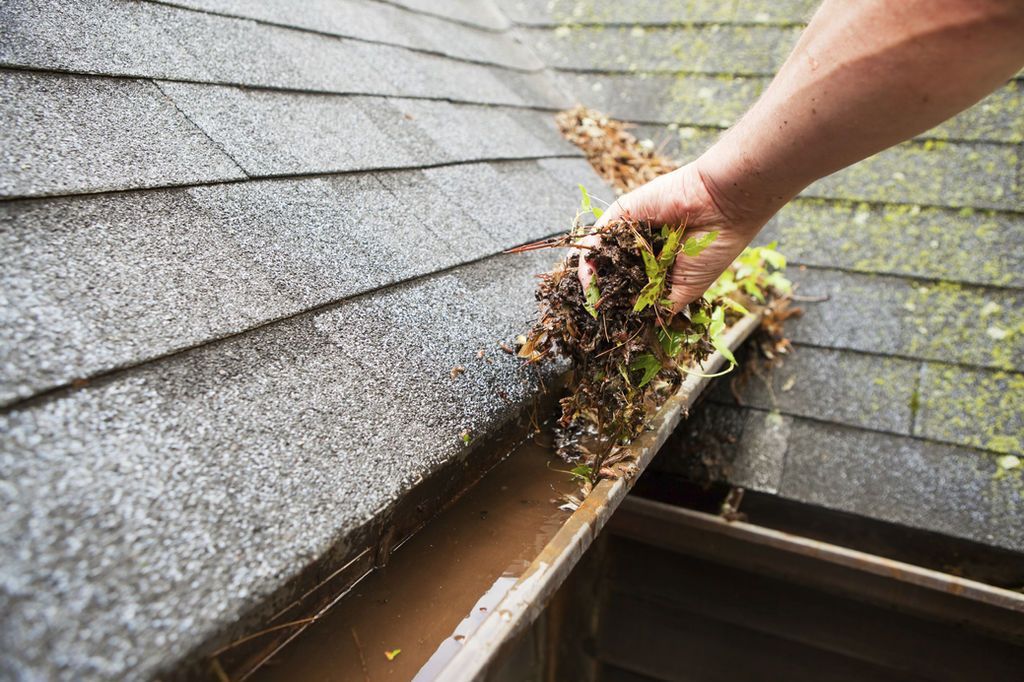
· Eliminate water entry points: maintain your roof in good condition. Roof gutters and downspouts should be kept clean and should drain water sufficiently away from the house. Regularly check any caulking and flashing around windows, doors, tubs, and showers and add or replace as needed.
· Ventilate indoor moisture: Just by breathing and perspiring, a typical family adds about three gallons of water per day to their indoor air. If a clothes dryer is not vented outside, or if the outdoor vent is closed off or clogged, all that moisture will enter the living space. Keep your ventilation system running efficiently with regular service and maintenance (including checking and changing the filter!) to ensure proper operation.
· Attic ventilation and insulation: Kitchen and bathroom exhaust fans should lead directly outside and should never be vented into the attic, where moisture can cause serious problems and pose potential health problems. Proper and consistent attic insulation depth should be maintained to control potential condensation from warm, interior air meeting the cold attic air.
· A dehumidifier can effectively reduce moisture levels (though it will increase your energy use).
WHERE in the home is “spot ventilation” most critical?
As mentioned above, whole-house ventilation has become the most common approach to ventilating homes today, with centralized HVAC systems being standard. However, “spot ventilation” is generally provided in kitchens and bathrooms as these areas are responsible for a significant amount of moisture and air pollutants inside of the home.
Kitchens: We all appreciate the delicious kitchen aromas of a home-cooked meal. However, to avoid those odors lingering or spreading to other areas of the home, strategically placed exhaust fans should be installed to remove particles, smoke, carcinogens, and odors from your indoor air.
The exhaust fan is usually directly over the kitchen stove and is installed in a range hood or cabinet. It can also be integrated with a microwave oven or mounted on the wall. The fan should always be ducted to exhaust outside of the home, not into the attic, crawlspace, or another interior area. Installations that exhaust back into the same room will filter grease and large particulates but have limited effectiveness in removing moisture generated by cooking processes.
When choosing a kitchen exhaust fan, the size should be appropriate for the size of your range. Generally, a 120 CFM fan is adequate for an overhead vent hood. This is a situation where bigger is NOT always better, however. High-capacity exhaust fans are not only loud but can create a negative pressure in the home which can lead to back-drafting of chimneys, potentially bringing dangerous combustion exhaust gases into the home.
Bathrooms: While bathroom odors are the most obvious justification for running a bathroom exhaust fan, the moisture, water vapor and steam created during an average shower or bath have far greater implications for home maintenance. If that warm, moist air isn’t properly exhausted, it has the potential to cause mold, mildew, and damage to the walls and structure of your home.
When choosing a fan for your bathroom, be sure to consider the size of the room. Generally, for bathrooms less than 100 sq. ft. in size, an exhaust fan should provide a minimum of 1 CFM per square foot of floor space. For bathrooms with a whirlpool-type tub, a higher-capacity fan is recommended.
Ceiling-mount bathroom exhaust fans are generally connected to an exhaust duct that runs through the attic or between floors. These are the most common types of fans.
Wall-mount bathroom fans are designed for rooms where venting through the ceiling isn’t possible. These fans typically vent directly through the wall to the outside with little or no exhaust ductwork.
Basement/slab: Radon is a naturally occurring decay product of uranium that emanates from rocks and soils under the earth’s surface as a colorless, odorless gas. As it’s produced, radon can concentrate in enclosed spaces, such as houses. The majority of radon in homes permeates through cracks in the foundation or slab. Other common pathways include plumbing penetrations and sump pumps.
If a home radon test indicates an ambient level of radon that is above the threshold (amount considered hazardous), mitigation will normally involve the installation of a sub-slab depressurization system. This generally involves the insertion of one or more suction pipes through the floor slab into the crushed rock or soil underneath and includes an exhaust fan that creates a negative pressure to pull air (and radon) from under the slab and exhaust it to the home’s exterior.
Maintenance of radon mitigation system exhaust fans is generally minimal, however, as a homeowner, it’s important that you check the system’s manometer regularly to confirm that the fan is operating properly.
WHAT are some other exhaust fan considerations:
Exhaust ducting: When designing or installing an exhaust fan, be sure to plan for the proper exhaust duct size. A hood for minimum extraction in most kitchens should have at least a six-inch duct exhaust. The hood should also be flexible enough to connect the duct work on the top or the rear of the unit. Ducting should have as short and straight a run to the outside as possible, so the fan works more efficiently. If the exhaust duct must turn or go a long distance, you might want to consider a fan with a larger capacity. The best exhaust paths are made using solid, smooth ducting—not ribbed or flexible which impede airflow. Where the ducting runs through unheated spaces, it should be properly sealed at every seam and insulated to avoid the cold air surrounding the ductwork causing condensation and leaks.
How long to run the exhaust fan: To completely remove the pollutants and moisture created during a kitchen or bathroom event, it’s recommended that exhaust fans be left on for 20 or 30 minutes after the source of the pollution has been eliminated. Optionally, you can install a timer on the exhaust fan switch to ensure it runs for the desired time. While running the exhaust fan, keep a door or window open slightly. If the bathroom is sealed while the fan is on, there is not enough air to draw air and properly exchange it—and the fan can’t push the moist air outside. If the airflow in your bathroom is restricted, your fan’s power will be reduced significantly.
Maintaining your exhaust fans: Dust, grease and other particles will accumulate on exhaust fan blades and other components, reducing the fan’s performance and longevity. Cleaning of the exhaust fan should be done as needed, but you should remove the cover and check it for dust build-up at least twice per year
You can also test your fan’s strength by holding a tissue up to it when it’s running. If the fan’s exhausting will hold the tissue in place, it’s probably working as required. If not, consider replacing it.
Understanding and maintenance of your home ventilation systems is an important responsibility of any homeowner. Proper design and operation can improve the longevity, air quality, and comfort of your home. A home maintenance inspection can help identify opportunities to optimize your home’s ventilation systems to ensure an energy-efficient, safe, and healthy home environment.